
Editorial Policies and Procedures
All submissions to CommonHealth will be screened by at least one of the Editors-in-Chief. Manuscripts of sufficient quality subsequently will be reviewed by members of the Editorial Board or other expert reviewers. At the discretion of the Editors-in-Chief, the submission may be returned immediately without a full review, if deemed not competitive or outside the scope of the Journal. Acceptance of submissions is based on the originality of the observation or investigation, the quality of the work described, the clarity of presentation, and the relevance to our readership.
The journal operates a single-blind peer-review process. Authors do not know the peer reviewers, but peer reviewers know the authors of the papers they are reviewing. The journal maintains a pool of peer reviewers with varied content and methodological expertise. Selected peer reviewers receive an email invitation containing a response link. Reviewers are able to view the article’s abstract before accepting or declining the review. Reviewers are generally asked to provide their assessment within 30 calendar days. If the invitation is declined or the link is not clicked by the response due date, the reviewer will be removed from the request queue for this article, and the next selected peer reviewer will be sent an invitation. The reviewer may decline a review due to a conflict of interest at any point during the process.
Once the reviewer accesses the review files, they review the manuscript and then submit their decision recommendation, comments for the author(s), and/or confidential comments for the editor. The decision recommendation is selected from a drop-down menu; comments can be entered directly into the fields provided or uploaded as an attachment. Papers are typically reviewed by two reviewers and may receive additional assessment by the responsible handling editor and/or Editors-in-Chief.
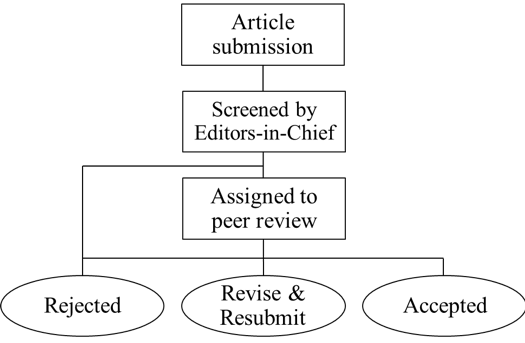
Figure 1. Flow Chart for Review Process.
Writing the Review
The purpose of the review is to provide the editors with an expert opinion regarding the validity and quality of the manuscript under consideration. The review should also supply authors with explicit feedback on how to improve their papers, if needed.
Some key points to keep in mind before you start:
- Make sure you can meet the deadline.
- Make sure you do not have a conflict of interest. An example of a conflict of interest is when the reviewer is a member of the author’s thesis/dissertation committee. If in doubt, the reviewers are encouraged to share any potential conflicts with editors by answering the respective question in the editorial system.
- Have a positive attitude and be supportive.
- Do not discriminate because of poor English; a scientific writing service can be recommended to the authors.
- Take your time and follow a systematic process.
- To familiarize yourself with the specific requirements for each submission type, please review the journal’s Author Guidelines.
As you write, consider the following points:
- What are the main claims of the paper and how significant are they for the field?
- Are the claims properly placed in the context of the previous literature? Have the authors treated the literature fairly and in an unbiased fashion?
- If appropriate, is there a theoretical foundation to guide the work?
- If it is a research study or evaluation, are the details of the methodology sufficient to allow the study to be reproduced?
- Do the data and analyses fully support the claims? If not, what other evidence is required?
- Is the manuscript well organized and written clearly enough to be accessible to non-specialists?
- If the paper is considered unsuitable for publication in its present form, does the study itself show sufficient potential that the authors should be encouraged to resubmit a revised version?
As you write the review, please:
- Write in full sentences.
- Provide page and paragraph references so the authors know the portion of the paper you are referencing.
- Be clear and concise in your writing; this is not a place to interject your commentary on the topic.
- Proofread before you submit.
We Appreciate Your Valuable Contribution
Your participation in the peer-review process is critical to the journal's success and directly impacts the quality of the journal we publish. At the time a decision is made, we will share with you the comments of all reviewers that worked on this paper. You may forward these “thank you” emails to reviews@publons.com to add a verified review to your Publons profile. CommonHealth will also recognize reviews in the form of citable acknowledgments in the last issue of each volume of the Journal. Reviewers who do not wish to be listed may communicate their preference via confidential comments for the editor.